—From the Times of London
Had he remained in the racing world as a trainer or thoroughbred expert after retiring from riding in 1957, Dick Francis would have been remembered as one of the most successful jockeys of his era.
Mr. Francis, who died Sunday at age 89, would also be remembered as the jockey who spectacularly managed to lose in the 1956 Grand National, Great Britain's most famous steeplechase. A photograph of him within a whisker of the finish line, aboard Queen Elizabeth's horse Devon Loch, flat on its belly with four legs helplessly splayed out, is one of racing's strangest images. To "do a Devon Loch" is a still a byword for losing a race from a seemingly unassailable position.
But the disaster actually helped launch Mr. Francis's subsequent career as a journalist and then as horse racing's most eloquent writer of thrillers. Almost all his books became international best-sellers, and they made Mr. Francis a wealthy man.
Raised in a village in Pembrokeshire in southwest Wales, Mr. Francis was the son of a horse-dealer, steeplechaser and farmer. Mr. Francis learned to ride when he was 5 and won his first race at age 8. His father felt that a day hunting or show-jumping was much more valuable to a growing boy than a day at school, and allowed Mr. Francis to drop out at age 15.
In 1939, Mr. Francis joined the Royal Air Force and was later commissioned as a pilot, flying fighters and bombers during World War II. In 1947, he married a university-educated and highly literate schoolmistress, Mary Margaret Brenchley, despite opposition from both families on the ground that they had so little in common. He arrived at their wedding with his arm in a sling, having fallen from a horse.
Mr. Francis turned professional in 1948, and was for four seasons in the 1950s Queen Elizabeth's No. 1 jockey. By the time of the Devon Loch debacle he had broken so many bones that he was advised to give up racing. His autobiography, "The Sport of Queens," was published in 1957, and Britain's Sunday Express used him as a racing correspondent for the next 16 years.
Mr. Francis approached the task of writing with little confidence. But journalism didn't pay as well as racing, and realizing that their two sons' school fees had to be paid, his wife suggested that he try a novel. Drawing on his own expertise, he wrote "Dead Cert." It was extremely well received, and, from then on, he produced a book a year.
Horses, in training or racing or being sold or put to stud, are featured in all his books. Mr. Francis's heroes tend to be lonely men, often widowed or divorced; they are frequently beaten up or injured, but they strive doggedly in their pursuit of the villains and in their personal lives, proving more resourceful and resilient than their melancholy natures permitted them to expect.
The books were set in exotic locales, from South Africa to Norway to Russia. Mary Francis explored whatever specialized fields were needed, learning to paint for "In the Frame" and about the wine trade for "Proof." "Flying Finish" involved the transport of horses, so Mrs. Francis learned to fly, an experience she enjoyed so much that she started an air-taxi service conveying people to racecourses.
Mr. Francis always acknowledged his debt to his wife, although he denied one biographer's claim that she was the primary author. After she died in 2000, he was helped by his son Felix. Mr. Francis's latest book, "Crossfire" is due to be published in August.
He would prefer, Mr. Francis sometimes said, to be remembered as a jockey rather than as a writer, but then admitted that, if that were the case, he would be remembered only as the man whose horse stopped in the Grand National.
—From the Times of London —Email remembrances@wsj.com
http://online.wsj.com/article/SB10001424052748704431404575067671970533114.html
Monday, February 15, 2010


Friday, January 29, 2010
Thorofan Fundraiser in NY
THOROFAN HONORS RACHEL ALEXANDRA AS HORSE OF THE YEAR AT HER 4TH BIRTHDAY PARTY
Raising Funds for Bobby Frankel Division of Old Friends at Cabin Creek
FREE ADMISSION
Date: Sunday Jan 31, 2010 Place: Union Grille, Saratoga Hilton 534 Broadway, Saratoga Springs, NY
Time: Seating 12-5pm
50% of tab will be donated to Old Friends at Cabin Creek by Andy Brindisi RSVP to be eligible for fab door prizes
Union Grille 518-682-2600
HILTON HOTEL HAS SPECIAL PRICING ON ROOMS AND SUITES More info? Contact: Bambii Rae (518) 695-3605 bambiirae@nycap.rr.com
GREAT FOOD, FUN PEOPLE, HAPPY BIRTHDAY SUNG TO RACHEL IN NEW ORLEANS See famed equine artist Frankie Flores create “Rachel”,
Hear infamous Artie Rigileto Vendors: pictures, jewelry, hats & clothes
DON'T MISS THE EXCITEMENT
--------
Member of: www.equinewelfarealliance.org
Raising Funds for Bobby Frankel Division of Old Friends at Cabin Creek
FREE ADMISSION
Date: Sunday Jan 31, 2010 Place: Union Grille, Saratoga Hilton 534 Broadway, Saratoga Springs, NY
Time: Seating 12-5pm
50% of tab will be donated to Old Friends at Cabin Creek by Andy Brindisi RSVP to be eligible for fab door prizes
Union Grille 518-682-2600
HILTON HOTEL HAS SPECIAL PRICING ON ROOMS AND SUITES More info? Contact: Bambii Rae (518) 695-3605 bambiirae@nycap.rr.com
GREAT FOOD, FUN PEOPLE, HAPPY BIRTHDAY SUNG TO RACHEL IN NEW ORLEANS See famed equine artist Frankie Flores create “Rachel”,
Hear infamous Artie Rigileto Vendors: pictures, jewelry, hats & clothes
DON'T MISS THE EXCITEMENT
--------
Member of: www.equinewelfarealliance.org
Thursday, January 28, 2010
Penn Temporarily Bans Horses Owned by Gill

By Claire Novak
Updated: Tuesday, January 26, 2010 12:55 PM
Posted: Monday, January 25, 2010 7:40 PM
Horses entered in the name of Michael Gill, North America’s leading owner by races won and purses earned in 2009, will not be accepted for entry at Hollywood Casino at Penn National Race Course effective immediately.
Chris McErlean, vice president of racing for track owner Penn National Gaming Inc., said Jan. 25 the temporary restriction has been put in place pending a meeting to review the necropsy results of two runners owned by Gill that recently broke down at the Pennsylvania track.
Several other runners owned by Gill have ralso eportedly suffered fatal breakdowns on the track since Oct. 1, although exact numbers have not been confirmed.
Gill, the leading owner in North America by purses earned and races won in 2003, 2004, and 2009—he led by wins and was second by earnings in 2005, the year he won an Eclipse Award—had taken a break from racing in 2006 but returned in 2008. He has 49 stalls at Penn National and stables the remainder of his 120 horses at his private training center, Elk Creek Ranch in Oxford, Pa.
Last year, 2,247 horses raced under his silks to 370 wins and earnings of $6,670,490.
“To my knowledge, regarding further entries at this point, we are going to wait until we have a scheduled meeting with Mr. Gill and his trainers once we get those reports from the most recent breakdowns,” McErlean said. “We want the ability to speak with him and his trainers to find out what’s going on and get some more information at that time.”
The practice of running and reviewing a necropsy exam on horses that suffer fatal injuries at Penn National is one instituted by the track at the start of the year in cooperation with the Pennsylvania Horse Racing Commission.
“We’ve set up a process between ourselves and the commission to do an informal review of the report, to allow the trainer to tell us of any issues they were aware of, and through looking at vet records to try to piece together any reasons why the breakdown could have occurred,” McErlean said.
McErlean said results of the necropsies should be available by Jan. 27, and a meeting could be scheduled by the end of the week.
The restriction follows a threatened boycott of Penn National’s Jan. 23 card by jockeys that were concerned over a second spill involving one of Gill’s entries in a three-day period. The Darrel Delahoussaye-trained Laughing Moon broke down after the wire under jockey Ricky Frazier in the fifth race Jan. 23. A previous incident occurred Jan. 21, when Melodeeman, trained by Anthony Adamo, suffered a catastrophic breakdown in the second race on the card.
After a lengthy delay, Adamo scratched Justin M, Gill’s only other entry on the card, from the sixth race. Trainers subsequently withdrew horses owned by Gill from ensuing race cards; horses were entered through Jan 28.
Anthony Black, a veteran Pennsylvania rider who was active in forming the Philadelphia Park Jockeys organization, said he spoke to several riders involved in the situation. Black also approached stewards at Philadelphia Park Casino & Racetrack to inform them of local riders’ concerns.
“I talked to three older riders who are based there, and they’re having second thoughts when it comes to riding races with his horses,” Black said. “They’ve not ridden good races, and they realize they haven’t, because they wouldn’t tuck in behind those horses in the blue and white Gill colors—and it makes good sense not to tuck in behind them when they’re breaking down like that.”
Gill, reached Jan. 25, said his horses did not break down at a higher rate than usual for lower-level claimers. He said he has always maintained a practice of complete transparency with racing authorities.
“They can go through all my horses at my farm, at the barn, unannounced, uninvited,” Gill said. “They can take any blood test, jog the horses, look at everything. I’ve always been that way. You find something illegal with these horses, I’ll quit.
“We ran 2,247 horses last year and did we have a bad test? Not one. How many trainers do you think can claim that?”
Gill said he believes his practice of running large numbers of horses and claiming from smaller operations has angered horsemen on circuits from Delaware to Florida. In 2003, he was involved in a similar controversy stemming from the fatal breakdown of the Mark Shuman-trained Casual Conflict, but was exonerated along with his trainer of all wrongdoing in the situation.
“The people that we’re claiming from who happen to have been in that community for the past 20-30 years are unhappy,” Gill said “It’s not new. We’re claiming an inordinate amount of horses and taking too much money off the table. I take grief because I own a lot of claiming horses, but how many people spend millions of dollars on horses that never even make it to the racetrack?”
According to Gill, in 2009 he had two horses that suffered fatal injuries at Penn National for the entire year.
“The horse that broke down (Jan. 23) was sound; he had just won the race before," Gill said. "I’ll show you his vet records. He'd never been ‘tapped.' Maybe the track was a little hard; that’s part of winter racing when you’re running at a track in January where it’s raining, snowing, and freezing, too.”
BLOGGERS NOTE: We shall await the results of the testing before entering Gill as the latest inductee into The Horse Racing Hall of Shame...as we firmly belive in the theory of innocent until proven guilty...it is the American Way.
http://ow.ly/11rZC
Saturday, January 23, 2010
Pletcher fined, suspended by CHRB
By Steve Andersen
Daily Racing Form
The California Horse Racing Board fined trainer Todd Pletcher $25,000 and suspended him at least 10 days for a positive test for the anesthetic procaine by Wait a While following a third-place finish in the $2 million Breeders' Cup Filly and Mare Turf at Santa Anita in 2008.
The board adopted the recommendation of hearing officer Steffan Imhoff in a closed-door session at its monthly meeting on Jan. 15. Imhoff recommended a 60-day suspension with 50 days of the penalty stayed in the event that Pletcher does not have a positive for medications in classes 1, 2, or 3 during for a year.
Pletcher did not return a phone call Friday seeking comment.
Procaine is a class 3 medication that is commonly used with penicillin, an antiobiotic.
Pletcher, who has a small stable in California this winter, must begin his suspension and pay the fine by Feb. 20, according to racing board executive director Kirk Breed.
In his decision, Imhoff said he gave Pletcher the maximum suspension allowed under racing board rules because the positive occurred after a Breeders' Cup race. He said a majority of the suspension was stayed because Wait a While was treated with procaine at the advice of Pletcher's veterinarian and was not treated with the medication in the 18 days before the race.
Imhoff wrote, "If, as we believe, another procaine injection was given shortly before the race, there is no evidence to suggest this was done by Pletcher, or on his behalf."
Imhoff said the attorney general's recommendation for a $50,000 fine was "too high," but that a drug violation in a $2 million race demands a "substantial" fine.
http://ow.ly/ZKUv
Daily Racing Form
The California Horse Racing Board fined trainer Todd Pletcher $25,000 and suspended him at least 10 days for a positive test for the anesthetic procaine by Wait a While following a third-place finish in the $2 million Breeders' Cup Filly and Mare Turf at Santa Anita in 2008.
The board adopted the recommendation of hearing officer Steffan Imhoff in a closed-door session at its monthly meeting on Jan. 15. Imhoff recommended a 60-day suspension with 50 days of the penalty stayed in the event that Pletcher does not have a positive for medications in classes 1, 2, or 3 during for a year.
Pletcher did not return a phone call Friday seeking comment.
Procaine is a class 3 medication that is commonly used with penicillin, an antiobiotic.
Pletcher, who has a small stable in California this winter, must begin his suspension and pay the fine by Feb. 20, according to racing board executive director Kirk Breed.
In his decision, Imhoff said he gave Pletcher the maximum suspension allowed under racing board rules because the positive occurred after a Breeders' Cup race. He said a majority of the suspension was stayed because Wait a While was treated with procaine at the advice of Pletcher's veterinarian and was not treated with the medication in the 18 days before the race.
Imhoff wrote, "If, as we believe, another procaine injection was given shortly before the race, there is no evidence to suggest this was done by Pletcher, or on his behalf."
Imhoff said the attorney general's recommendation for a $50,000 fine was "too high," but that a drug violation in a $2 million race demands a "substantial" fine.
http://ow.ly/ZKUv
Saturday, January 9, 2010
Cincinnati Horse Trainer Charged with Cruelty, Abandonment
by: Pat Raia
January 08 2010, Article # 15610
Thoroughbred horse trainer Chad Moore faces multiple animal cruelty charges in connection with the alleged abandonment and maltreatment of horses at his Ohio farm.
Clermont County animal control officials removed six allegedly malnourished Thoroughbred horses, one pony, and one donkey from Moore's Bethel Farm last month. The carcasses of at least 10 horses were also found on the property, said Clermont County Communications Director Kathy Lehr.
Moore was arrested on unrelated charges shortly after the animals' removal.
On Thursday, he was charged with two counts of animal abandonment and two counts of animal cruelty. Additional charges are pending, Lehr said. Moore remains in the Clermont County jail.
Two mares were euthanized. The surviving animals are receiving rehabilitative care at a private farm.
Read more: Two Seized Cincinnati Horses Euthanized
http://www.thehorse.com/ViewArticle.aspx?ID=15610
January 08 2010, Article # 15610
Thoroughbred horse trainer Chad Moore faces multiple animal cruelty charges in connection with the alleged abandonment and maltreatment of horses at his Ohio farm.
Clermont County animal control officials removed six allegedly malnourished Thoroughbred horses, one pony, and one donkey from Moore's Bethel Farm last month. The carcasses of at least 10 horses were also found on the property, said Clermont County Communications Director Kathy Lehr.
Moore was arrested on unrelated charges shortly after the animals' removal.
On Thursday, he was charged with two counts of animal abandonment and two counts of animal cruelty. Additional charges are pending, Lehr said. Moore remains in the Clermont County jail.
Two mares were euthanized. The surviving animals are receiving rehabilitative care at a private farm.
Read more: Two Seized Cincinnati Horses Euthanized
http://www.thehorse.com/ViewArticle.aspx?ID=15610
Monday, January 4, 2010
Racing Industry "Catches" Equine Disease
I have got to say, if it wasent for this New Mexican Race-tracks Screening Methods, this disease might never have been detected. Nice catch NM!
EQUINE PIROPLASMOSIS - USA (12): (NEW MEXICO)
***********************************************
A ProMED-mail post
ProMED-mail is a program of the
International Society for Infectious Diseases
Date: 28 Dec 2009
Source: The Horse.com [edited]
As part of a racetrack screening program, 3 New Mexico horses have
been identified as infected with _Theileria equi_, a causative agent
for equine piroplasmosis. These infections are noteworthy as these
horses are not epidemiologically linked to those involved in a larger
ongoing investigation centered on horses from a South Texas ranch.
Information on the new cases, and an update on the Texas
investigation, was included in a 24 Dec 2009 report issued to the
World Organization for Animal Health (Office International des
Epizooties, or OIE) by John Clifford, DVM, deputy administrator of
the USDA's Animal and Plant Health Inspection Service.
The positive New Mexico horses did not show any clinical signs of
disease. Preliminary results of the investigation indicate that the
transmission of the organism might have resulted from management
practices (use of shared needles or substances between horses) rather
than by a tick vector, the OIE report noted. More than 1300 New
Mexico horses have been tested via the screening program.
Officials in the United States have screened all imported horses for
piroplasmosis for nearly 30 years. The disease was officially
eradicated from the United States in 1988. It is spread by some
species of ticks, the use of contaminated needles, and possibly
through blood-contaminated semen of infected stallions.
Clinical signs of equine piroplasmosis can include a host of
nonspecific problems, such as fever or anemia, and some infected
horses might appear healthy. Blood tests are needed to diagnosis the
disease. The only treatment is a potent type of chemotherapy that can
have serious side effects in some horses.
The larger piroplasmosis investigation remains underway, with 357
confirmed positive horses. All of the positive horses have direct
links to the index premises in Kleberg County, Texas. The OIE report
stated these include horses that currently or previously lived on the
index premises or live on a premises immediately adjacent, or [near]
other "dangerous contacts" (a positive foal born to an infected mare
was listed as an example of such).
Positive horses have been located in 12 states, with 289 positive
horses on the index ranch in Texas, 41 on other premises in Texas, 2
in Alabama, 2 in California, 5 in Florida, one in Georgia, 2 in
Indiana, 5 in Louisiana, 1 in Minnesota, 2 in North Carolina, 4 in
New Jersey, 1 in Tennessee, 1 in Utah, and 1 in Wisconsin. All known
positive horses are under quarantine.
More than 1500 horses have been tested for equine piroplasmosis as
part of the epidemiological investigation, including 587 horses
exposed to positive horses outside of the index premises. All of
these cohorts have tested negative, the report stated.
As a result of the current investigation, Canada and several U.S.
states have restricted the importation of horses from Texas. Horse
owners and veterinarians shipping horses are urged to check with
animal health officials in your state of destination to ensure the
animals have met all entry requirements.
[Byline: Erin Ryder]
--
Communicated by:
ProMED-mail
[Although the horses do not appear to be epidemiologically linked to
the outbreak that started in Texas, sharing needles between horses
does not give a horse piroplasmosis unless those needles have been in
a horse with piroplasmosis. In other words, the disease had to have
come from somewhere. The question is where. Will New Mexico cast a
surveillance net to detect where the disease really came from? -
Mod.TG]
[see also:
Equine piroplasmosis - USA (11): multi-state 20091203.4128
Equine piroplasmosis - USA (10) 20091117.3963
Equine piroplasmosis - USA (09): (NJ ex TX) 20091111.3912
Equine piroplasmosis - USA (08): (TX) alert 20091030.3749
Equine piroplasmosis - USA (07): (TX) 20091024.3675
Equine piroplasmosis - USA (06): (TX) OIE 20091022.3631
Equine piroplasmosis - USA (05): (TX) 20091021.3617
Equine piroplasmosis - USA (04): (KS, MO) resolved 20090917.3262
Piroplasmosis, equine - USA (03): (KS, MO) 20090729.2662
Equine Piroplasmosis - USA (02): (MO) 20090612.2172
Equine Piroplasmosis - USA: (FL) quarantine lifted 20090225.0771
2008
----
Equine Piroplasmosis - USA (04): (FL) 20080930.3088
Equine Piroplasmosis - USA: (03) (FL) 20080828.2687
Equine piroplasmosis - USA (02): (FL) 20080823.2626
Equine piroplasmosis - USA: (FL) 20080819.2579]
...................................................tg/msp/lm
*##########################################################*
************************************************************
ProMED-mail makes every effort to verify the reports that
are posted, but the accuracy and completeness of the
information, and of any statements or opinions based
thereon, are not guaranteed. The reader assumes all risks in
using information posted or archived by ProMED-mail. ISID
and its associated service providers shall not be held
responsible for errors or omissions or held liable for any
damages incurred as a result of use or reliance upon posted
or archived material.
************************************************************
Become a ProMED-mail Premium Subscriber at
************************************************************
Visit ProMED-mail's web site at.
Send all items for posting to: promed@promedmail.org
(NOT to an individual moderator). If you do not give your
full name and affiliation, it may not be posted. Send
commands to subscribe/unsubscribe, get archives, help,
etc. to: majordomo@promedmail.org. For assistance from a
human being send mail to: owner-promed@promedmail.org.
############################################################
############################################################
EQUINE PIROPLASMOSIS - USA (12): (NEW MEXICO)
***********************************************
A ProMED-mail post
ProMED-mail is a program of the
International Society for Infectious Diseases
Date: 28 Dec 2009
Source: The Horse.com [edited]
As part of a racetrack screening program, 3 New Mexico horses have
been identified as infected with _Theileria equi_, a causative agent
for equine piroplasmosis. These infections are noteworthy as these
horses are not epidemiologically linked to those involved in a larger
ongoing investigation centered on horses from a South Texas ranch.
Information on the new cases, and an update on the Texas
investigation, was included in a 24 Dec 2009 report issued to the
World Organization for Animal Health (Office International des
Epizooties, or OIE) by John Clifford, DVM, deputy administrator of
the USDA's Animal and Plant Health Inspection Service.
The positive New Mexico horses did not show any clinical signs of
disease. Preliminary results of the investigation indicate that the
transmission of the organism might have resulted from management
practices (use of shared needles or substances between horses) rather
than by a tick vector, the OIE report noted. More than 1300 New
Mexico horses have been tested via the screening program.
Officials in the United States have screened all imported horses for
piroplasmosis for nearly 30 years. The disease was officially
eradicated from the United States in 1988. It is spread by some
species of ticks, the use of contaminated needles, and possibly
through blood-contaminated semen of infected stallions.
Clinical signs of equine piroplasmosis can include a host of
nonspecific problems, such as fever or anemia, and some infected
horses might appear healthy. Blood tests are needed to diagnosis the
disease. The only treatment is a potent type of chemotherapy that can
have serious side effects in some horses.
The larger piroplasmosis investigation remains underway, with 357
confirmed positive horses. All of the positive horses have direct
links to the index premises in Kleberg County, Texas. The OIE report
stated these include horses that currently or previously lived on the
index premises or live on a premises immediately adjacent, or [near]
other "dangerous contacts" (a positive foal born to an infected mare
was listed as an example of such).
Positive horses have been located in 12 states, with 289 positive
horses on the index ranch in Texas, 41 on other premises in Texas, 2
in Alabama, 2 in California, 5 in Florida, one in Georgia, 2 in
Indiana, 5 in Louisiana, 1 in Minnesota, 2 in North Carolina, 4 in
New Jersey, 1 in Tennessee, 1 in Utah, and 1 in Wisconsin. All known
positive horses are under quarantine.
More than 1500 horses have been tested for equine piroplasmosis as
part of the epidemiological investigation, including 587 horses
exposed to positive horses outside of the index premises. All of
these cohorts have tested negative, the report stated.
As a result of the current investigation, Canada and several U.S.
states have restricted the importation of horses from Texas. Horse
owners and veterinarians shipping horses are urged to check with
animal health officials in your state of destination to ensure the
animals have met all entry requirements.
[Byline: Erin Ryder]
--
Communicated by:
ProMED-mail
[Although the horses do not appear to be epidemiologically linked to
the outbreak that started in Texas, sharing needles between horses
does not give a horse piroplasmosis unless those needles have been in
a horse with piroplasmosis. In other words, the disease had to have
come from somewhere. The question is where. Will New Mexico cast a
surveillance net to detect where the disease really came from? -
Mod.TG]
[see also:
Equine piroplasmosis - USA (11): multi-state 20091203.4128
Equine piroplasmosis - USA (10) 20091117.3963
Equine piroplasmosis - USA (09): (NJ ex TX) 20091111.3912
Equine piroplasmosis - USA (08): (TX) alert 20091030.3749
Equine piroplasmosis - USA (07): (TX) 20091024.3675
Equine piroplasmosis - USA (06): (TX) OIE 20091022.3631
Equine piroplasmosis - USA (05): (TX) 20091021.3617
Equine piroplasmosis - USA (04): (KS, MO) resolved 20090917.3262
Piroplasmosis, equine - USA (03): (KS, MO) 20090729.2662
Equine Piroplasmosis - USA (02): (MO) 20090612.2172
Equine Piroplasmosis - USA: (FL) quarantine lifted 20090225.0771
2008
----
Equine Piroplasmosis - USA (04): (FL) 20080930.3088
Equine Piroplasmosis - USA: (03) (FL) 20080828.2687
Equine piroplasmosis - USA (02): (FL) 20080823.2626
Equine piroplasmosis - USA: (FL) 20080819.2579]
...................................................tg/msp/lm
*##########################################################*
************************************************************
ProMED-mail makes every effort to verify the reports that
are posted, but the accuracy and completeness of the
information, and of any statements or opinions based
thereon, are not guaranteed. The reader assumes all risks in
using information posted or archived by ProMED-mail. ISID
and its associated service providers shall not be held
responsible for errors or omissions or held liable for any
damages incurred as a result of use or reliance upon posted
or archived material.
************************************************************
Become a ProMED-mail Premium Subscriber at
************************************************************
Visit ProMED-mail's web site at
Send all items for posting to: promed@promedmail.org
(NOT to an individual moderator). If you do not give your
full name and affiliation, it may not be posted. Send
commands to subscribe/unsubscribe, get archives, help,
etc. to: majordomo@promedmail.org. For assistance from a
human being send mail to: owner-promed@promedmail.org.
############################################################
############################################################
Thursday, December 31, 2009
Racehorse's Plight Shines Light On Illegal Slaughter Farms
Posted: 7:28 PM Dec 30, 2009
Freedom's Flight is a beautiful thoroughbred with an impressive pedigree. His bloodlines can be traced to two of the greatest race horses of all time, Seattle Slew and Secretariat.
Reporter: CNN
Font Size: Miami, Florida (CNN) -- Freedom's Flight is a beautiful thoroughbred with an impressive pedigree. His bloodlines can be traced to two of the greatest race horses of all time, Seattle Slew and Secretariat.
But, unlike his kinship, Freedom's Flight's racing career ended before it had even started. It was almost two years ago when the thoroughbred's leg snapped right out of the gate at Miami's Gulfstream race track. The animal's days as a cherished racehorse came to an abrupt end.
"He came from the famous Clairborne farm and ended up on one of the worst farms in America," says new owner Richard "Kudo" Couto.
That "worst" farm in America turned out to be an illegal slaughter farm in Miami-Dade County, Florida. Couto, working for the South Florida Society for the Prevention of Cruelty to Animals, participated in a raid on the farm and rescued Freedom's Flight. The timing of that rescue may have saved Freedom's Flight's life. The horse was limping around on his broken leg, he had sores on his body, and you could see his bones protruding from his dirty coat.
Some 18 months since his rescue, Freedom's Flight looks more like the stunning race horse that was worth thousands of dollars than the injured horse that was sold for $50 to an illegal slaughter farm.
"Prior to his rescue, I didn't know that illegal slaughter farms existed in the country -- let alone under my nose in my own county," says Couto.
This new knowledge has motivated Couto. "It really made me buckle down and basically dedicate my life to shut this industry down. It's become personal for me," he says.
Couto suspects that there are more than 100 illegal slaughterhouses in the area. There is only one slaughterhouse that operates legally, Cabrera's, and there the United States Department of Agriculture inspectors are housed on its property.
Many of these illegal places are concentrated in an unincorporated area of Miami-Dade County. The roads are dirt, the vegetation thick and uninviting. This is the western fringe of Miami along the rim of the Everglades, an area considered a sort of no-man's land.
There are signs in English and in Spanish advertising animals for sale. Tarps are put up to hide what is behind the chain link fences, but most of these businesses are open to the public. "You don't have to be a rocket scientist after walking the properties and seeing the dead carcasses, the guts in the trash bins, the slaughter tables, the knives -- all of the tools of running this type of operation is right in front of you," says Couto.
CNN visited several of these establishments. At one location where a pig was being carved on one table and a chicken on the other, we asked to film on the property. "This slaughterhouse isn't as clean as you can see, try Cabrera's," said the unidentified man behind the slaughter table. Like several places we visited there was blood on the floor, dirty butcher knives and an overwhelming stench.
Couto says it isn't the slaughtering of animals that has put him on this mission. It's the way the animals are treated.
"These animals are living in extreme filth. They're beaten. The way they're slaughtered is inhumane," says Couto.
Couto has been on a one-man crusade to shut down illegal slaughterhouses that are operating without licenses and without oversight by the health or agriculture departments. He was first exposed to what he calls the "dark underbelly" of the area when, with the Florida SPCA, he was investigating the slaughter of horses for their meat.
Motivated by Freedom's Flight, Couto left the South Florida SPCA to form his own organization called ARM -- Animal Recovery Mission.
For the past year he has used a video camera to collect evidence. Couto has simply walked right into dozens of slaughterhouses and has filmed bloody slaughter tables.
"I go in acting like a customer," he says, "I ask them, 'How much for the pig?' And they'll say 120 dollars. 'How much for the kill?' '20 bucks. We'll slaughter it for you for 20 bucks.' It's that easy."
One local agency that spends a lot of time in the area because sections of it are considered protected wetland is the Miami-Dade Department of Environmental Resources Management. Carlos Espinosa is in charge of enforcing the county's environmental regulations.
"When we come across other issues relating to other departments, we pass that information on to other departments," says Espinosa.
Couto took his story and his videos to every local agency he could think of with oversight responsibility. He tried to set up a task force with agencies in charge of violations such as animal cruelty, illegal structures, illegal businesses, permit problems and zoning issues. A sign-in sheet from one of these meetings shows many of the agencies attended the meeting, but Couto says nothing came of it.
CNN contacted Miami-Dade Animal Services Department, an agency that had a representative at that meeting. Spokesperson Xiomara Mordcovich said the agency does not deal with issues involving farm animals and directed us to the Miami-Dade Police Department.
The Police Department declined an interview. "We are not actively investigating any incidents involving illegal slaughterhouses," the department said in an e-mail. Then it referred us back to Animal Services and also to the code compliance department.
Charles Danger, director of the Miami-Dade Building and Neighborhood Compliance Department, admits that it was because of Couto's persistence that it is now putting together a multi-agency task force he called "Operation Miss Piggy and Mr. Ed."
According to Danger, part of the reason nothing has been done to clean up this area is because of fear for the safety of inspectors.
"Every time we go in there, we have to go in there with the police -- and even the police don't want to go in there," says Danger.
Danger says the Miami-Dade Police Department is now on the new task force, which also includes agencies such as the state health department and the U.S. Department of Agriculture. "It comes from a lot of years of illegal operation. We have to do it together because it's not going to be easy," says Danger.
One organization that will keep tabs on the progress is the Animal Recovery Mission. Couto says he will not go away quietly. He calls his mission "redemption and revenge for Freedom's Flight and what he went through."
Freedom's Flight is a beautiful thoroughbred with an impressive pedigree. His bloodlines can be traced to two of the greatest race horses of all time, Seattle Slew and Secretariat.
Reporter: CNN
Font Size: Miami, Florida (CNN) -- Freedom's Flight is a beautiful thoroughbred with an impressive pedigree. His bloodlines can be traced to two of the greatest race horses of all time, Seattle Slew and Secretariat.
But, unlike his kinship, Freedom's Flight's racing career ended before it had even started. It was almost two years ago when the thoroughbred's leg snapped right out of the gate at Miami's Gulfstream race track. The animal's days as a cherished racehorse came to an abrupt end.
"He came from the famous Clairborne farm and ended up on one of the worst farms in America," says new owner Richard "Kudo" Couto.
That "worst" farm in America turned out to be an illegal slaughter farm in Miami-Dade County, Florida. Couto, working for the South Florida Society for the Prevention of Cruelty to Animals, participated in a raid on the farm and rescued Freedom's Flight. The timing of that rescue may have saved Freedom's Flight's life. The horse was limping around on his broken leg, he had sores on his body, and you could see his bones protruding from his dirty coat.
Some 18 months since his rescue, Freedom's Flight looks more like the stunning race horse that was worth thousands of dollars than the injured horse that was sold for $50 to an illegal slaughter farm.
"Prior to his rescue, I didn't know that illegal slaughter farms existed in the country -- let alone under my nose in my own county," says Couto.
This new knowledge has motivated Couto. "It really made me buckle down and basically dedicate my life to shut this industry down. It's become personal for me," he says.
Couto suspects that there are more than 100 illegal slaughterhouses in the area. There is only one slaughterhouse that operates legally, Cabrera's, and there the United States Department of Agriculture inspectors are housed on its property.
Many of these illegal places are concentrated in an unincorporated area of Miami-Dade County. The roads are dirt, the vegetation thick and uninviting. This is the western fringe of Miami along the rim of the Everglades, an area considered a sort of no-man's land.
There are signs in English and in Spanish advertising animals for sale. Tarps are put up to hide what is behind the chain link fences, but most of these businesses are open to the public. "You don't have to be a rocket scientist after walking the properties and seeing the dead carcasses, the guts in the trash bins, the slaughter tables, the knives -- all of the tools of running this type of operation is right in front of you," says Couto.
CNN visited several of these establishments. At one location where a pig was being carved on one table and a chicken on the other, we asked to film on the property. "This slaughterhouse isn't as clean as you can see, try Cabrera's," said the unidentified man behind the slaughter table. Like several places we visited there was blood on the floor, dirty butcher knives and an overwhelming stench.
Couto says it isn't the slaughtering of animals that has put him on this mission. It's the way the animals are treated.
"These animals are living in extreme filth. They're beaten. The way they're slaughtered is inhumane," says Couto.
Couto has been on a one-man crusade to shut down illegal slaughterhouses that are operating without licenses and without oversight by the health or agriculture departments. He was first exposed to what he calls the "dark underbelly" of the area when, with the Florida SPCA, he was investigating the slaughter of horses for their meat.
Motivated by Freedom's Flight, Couto left the South Florida SPCA to form his own organization called ARM -- Animal Recovery Mission.
For the past year he has used a video camera to collect evidence. Couto has simply walked right into dozens of slaughterhouses and has filmed bloody slaughter tables.
"I go in acting like a customer," he says, "I ask them, 'How much for the pig?' And they'll say 120 dollars. 'How much for the kill?' '20 bucks. We'll slaughter it for you for 20 bucks.' It's that easy."
One local agency that spends a lot of time in the area because sections of it are considered protected wetland is the Miami-Dade Department of Environmental Resources Management. Carlos Espinosa is in charge of enforcing the county's environmental regulations.
"When we come across other issues relating to other departments, we pass that information on to other departments," says Espinosa.
Couto took his story and his videos to every local agency he could think of with oversight responsibility. He tried to set up a task force with agencies in charge of violations such as animal cruelty, illegal structures, illegal businesses, permit problems and zoning issues. A sign-in sheet from one of these meetings shows many of the agencies attended the meeting, but Couto says nothing came of it.
CNN contacted Miami-Dade Animal Services Department, an agency that had a representative at that meeting. Spokesperson Xiomara Mordcovich said the agency does not deal with issues involving farm animals and directed us to the Miami-Dade Police Department.
The Police Department declined an interview. "We are not actively investigating any incidents involving illegal slaughterhouses," the department said in an e-mail. Then it referred us back to Animal Services and also to the code compliance department.
Charles Danger, director of the Miami-Dade Building and Neighborhood Compliance Department, admits that it was because of Couto's persistence that it is now putting together a multi-agency task force he called "Operation Miss Piggy and Mr. Ed."
According to Danger, part of the reason nothing has been done to clean up this area is because of fear for the safety of inspectors.
"Every time we go in there, we have to go in there with the police -- and even the police don't want to go in there," says Danger.
Danger says the Miami-Dade Police Department is now on the new task force, which also includes agencies such as the state health department and the U.S. Department of Agriculture. "It comes from a lot of years of illegal operation. We have to do it together because it's not going to be easy," says Danger.
One organization that will keep tabs on the progress is the Animal Recovery Mission. Couto says he will not go away quietly. He calls his mission "redemption and revenge for Freedom's Flight and what he went through."
Tuesday, December 15, 2009
NYRA announces anti-slaughter policy
Well its about time! NYS has thee most lucrative breeding incentives in the world,....it is the least they can do.
SARATOGA SPRINGS - The New York Racing Association is cracking the whip on owners and trainers who sell their horses to slaughter.
NYRA announced a new policy Thursday -- a month after NewsChannel 13 reported that the organization didn't have written rules regarding slaughter.
While they're racing and winning, they often live the good life. After they've lost their value, it's possible for racehorses to end up at slaughterhouses -- strung up, throats slashed and allowed to bleed out.
More Information:
NYRA Details Anti-Slaughter Policy
Related Stories:
Part 1: Home stretch for thoroughbreds
Part 2: Life after the track
The movement to make sure racehorses don't end up slaughtered for food gained momentum when NYRA adopted strict new no-slaughter rules.
The new NYRA policy says any owner or trainer who sells a horse to slaughter will lose his barn privileges permanently.
"Horse slaughter will not be tolerated and those participating in this practice, either knowingly or for lack of due diligence, will not be welcome at Aqueduct, Belmont Park, or Saratoga," NYRA President and CEO Charles Hayward said in a statement.
This policy is a personal victory for John Hendrickson of Marylou Whitney Stables. Shortly after NewsChannel 13 told the story of racehorse slaughter in late October, Hendrickson took the issue to his fellow NYRA board members.
"They were very receptive. There's nobody that's for slaughter," Hendrickson said.
According to the humane society, up to 20 percent of all thoroughbreds end up slaughtered. The thoroughbred retirement foundation works to save racehorses and welcomes NYRA's new no-tolerance policy.
"This sends the absolute right message to owners and breeders, saying we have to think about these horses for their whole lives, not just when they're on the track trying to make money for us," said Diana Pikulski of the Thoroughbred Retirement Foundation.
Click on title above for original article and video;
http://www.topix.com/forum/sports/horse-racing/TV5L6UAUNQ9H9O40K
SARATOGA SPRINGS - The New York Racing Association is cracking the whip on owners and trainers who sell their horses to slaughter.
NYRA announced a new policy Thursday -- a month after NewsChannel 13 reported that the organization didn't have written rules regarding slaughter.
While they're racing and winning, they often live the good life. After they've lost their value, it's possible for racehorses to end up at slaughterhouses -- strung up, throats slashed and allowed to bleed out.
More Information:
NYRA Details Anti-Slaughter Policy
Related Stories:
Part 1: Home stretch for thoroughbreds
Part 2: Life after the track
The movement to make sure racehorses don't end up slaughtered for food gained momentum when NYRA adopted strict new no-slaughter rules.
The new NYRA policy says any owner or trainer who sells a horse to slaughter will lose his barn privileges permanently.
"Horse slaughter will not be tolerated and those participating in this practice, either knowingly or for lack of due diligence, will not be welcome at Aqueduct, Belmont Park, or Saratoga," NYRA President and CEO Charles Hayward said in a statement.
This policy is a personal victory for John Hendrickson of Marylou Whitney Stables. Shortly after NewsChannel 13 told the story of racehorse slaughter in late October, Hendrickson took the issue to his fellow NYRA board members.
"They were very receptive. There's nobody that's for slaughter," Hendrickson said.
According to the humane society, up to 20 percent of all thoroughbreds end up slaughtered. The thoroughbred retirement foundation works to save racehorses and welcomes NYRA's new no-tolerance policy.
"This sends the absolute right message to owners and breeders, saying we have to think about these horses for their whole lives, not just when they're on the track trying to make money for us," said Diana Pikulski of the Thoroughbred Retirement Foundation.
Click on title above for original article and video;
http://www.topix.com/forum/sports/horse-racing/TV5L6UAUNQ9H9O40K
Monday, December 7, 2009
Ohio Standardbred Barn Fire Kills 2 Men, 42 Horses

Horse owners stood stunned as they watched heavy machinery peel back the metal roof of the collapsed structure so firefighters could sift through the debris and extinguish what remained of the blaze. -- PHOTO: AP
LEBANON (Ohio) - A FIRE ripped through a horse barn at a county fairgrounds Saturday in southwest Ohio, killing two men and 43 horses, authorities said.
The barn roof had already collapsed by the time firefighters arrived at the Warren County Fairgrounds early Saturday morning, according to Capt. Krista Wyatt of the Lebanon Fire Department.
The bodies of the men were pulled from the barn and were badly burned, said Shane Cartmill, a spokesman for the Ohio State Fire Marshal. Cartmill was unable to confirm the identities late Saturday.
A horse owner identified the men as Ronnie Williams and James Edwards, both trainers at a harness racing racetrack based at the fairgrounds. Victor Gray, who owned three of the horses that died, said he'd known Williams nearly 40 years. Lamar Moody, lead trainer at Lebanon Raceway, said two of his employees were not accounted for.
No one was supposed to be in the stables overnight and it was not clear if the two men killed were working early or sleeping in the barn. 'It's a terrible situation,' said Gray. 'This is something that didn't have to happen.' The cause of the blaze was under investigation, but state fire investigators say they have ruled out criminal intent.
Horse owners stood stunned as they watched heavy machinery peel back the metal roof of the collapsed structure so firefighters could sift through the debris and extinguish what remained of the blaze. The horses weren't pets but nonetheless were 'part of the family, our kids,' Gray said. 'We loved those horses.' In 1988, a fire in a similar part of the county-owned racetrack and fairgrounds killed 35 horses. No one was killed in that fire. -- AP
LEBANON (Ohio) - A FIRE ripped through a horse barn at a county fairgrounds Saturday in southwest Ohio, killing two men and 43 horses, authorities said.
The barn roof had already collapsed by the time firefighters arrived at the Warren County Fairgrounds early Saturday morning, according to Capt. Krista Wyatt of the Lebanon Fire Department.
The bodies of the men were pulled from the barn and were badly burned, said Shane Cartmill, a spokesman for the Ohio State Fire Marshal. Cartmill was unable to confirm the identities late Saturday.
A horse owner identified the men as Ronnie Williams and James Edwards, both trainers at a harness racing racetrack based at the fairgrounds. Victor Gray, who owned three of the horses that died, said he'd known Williams nearly 40 years. Lamar Moody, lead trainer at Lebanon Raceway, said two of his employees were not accounted for.
No one was supposed to be in the stables overnight and it was not clear if the two men killed were working early or sleeping in the barn. 'It's a terrible situation,' said Gray. 'This is something that didn't have to happen.' The cause of the blaze was under investigation, but state fire investigators say they have ruled out criminal intent.
Horse owners stood stunned as they watched heavy machinery peel back the metal roof of the collapsed structure so firefighters could sift through the debris and extinguish what remained of the blaze. The horses weren't pets but nonetheless were 'part of the family, our kids,' Gray said. 'We loved those horses.' In 1988, a fire in a similar part of the county-owned racetrack and fairgrounds killed 35 horses. No one was killed in that fire. -- AP
Sunday, July 19, 2009
HorsePac: An UnHoly Alliance of Pro-Slaughter Equine Industrialists
In this loosley disguised "HorseSlaughterPac," you will "meet the money" behind the campaigns to keep horse slaughter going; this is what we are up against in Congress.
Message from the president
March 11, 2008
Horse PAC enjoyed its widest support in 2007. With receipts of $347,604 in 2007, Horse PAC ended the year with $490,793 in cash on hand. A record 221 NTRA members contributed to the PAC this year. We thank them for their constancy and support.
The Horse PAC Board also welcomed four new Directors during 2007: George B. Bolton, Marc W. Dunbar, Robert S. Evans and J. Kenneth Luke, bringing the total number of directors to 18 for 2007. Horse PAC may have up to 25 Board members.
Horse PAC disbursements in 2007 were $294,500, a record for a non-election year. The PAC supported 10 of the "freshmen" Members elected at the start of the 2006/2007 Congressional cycle and in all, supported 84 individual candidates from 34 states.
The PAC’s most important determinant for giving remains a candidate’s Committee membership. Horse PAC’s support was spread across key committees that oversee the pari-mutuel horse racing and breeding industries, including Agriculture, Energy & Commerce, Ways & Means, Finance, Homeland Security and Judiciary.
Reaffirming Horse PAC’s mission to support only Federal political candidates and parties at the Congressional level, the Board of Directors in 2007 unanimously passed a resolution barring Horse PAC contributions to United States Presidential candidates.
As we look forward to 2008, we anticipate yet another season of growth for Horse PAC, which continues to be the largest gaming PAC after just five and a half years of operations.
With an election year upon us and a number of key legislative issues still to be addressed in the 110th Congress, we expect an active year on multiple fronts in Washington, D.C. A summary of our key legislative issues and activities in 2007 appears on pages 15 through 18 of this report.
We encourage you to keep abreast of our efforts on Capitol Hill by visiting our Web site, www.SupportHorseRacing.org. Thank you for your support.
Sincerely,
Peggy Hendershot
Horse PAC President
Table of Contents
Message from the PAC President..................................1
Board of Directors ................................................................2
About Horse PAC ................................................................3
Receipts ......................................................................................4
Contributors...............................................................................5
Disbursements ........................................................................7
Legislative Summary.............................................................15
2007 horse pacboard of directors
In 2006, the by-laws of Horse PAC were amended to allow up to 25 members on the Board of Directors. Directors are appointed by the PAC President. The 2007 Horse PAC Board consisted of:
William S. Farish, Jr., Chairman
Antony Beck
George B. Bolton
Case Clay
Laura A. D’Angelo
Marc W. Dunbar
Robert Elliston
Robert S. Evans
Tracy Farmer
Terrence P. Finley
Lucy Young Hamilton
John C. Harris
F. Jack Liebau, Jr.
J. Kenneth Luke
Wilhelmina McEwan
Terence J. Meyocks
Anne W. Poulson
Joseph V. Shields, Jr.
Alexander M. Waldrop
NTRA President and CEO, ex officio
Peggy Hendershot
President & Treasurer
Barbara Fossum
Assistant Treasurer
about horse pac
Horse PAC is the Federal Political Action Committee (PAC) of the National Thoroughbred Racing Association (NTRA). The Committee was activated in 2002 to promote and facilitate the accumulation of voluntary contributions from members of the NTRA and its subsidiaries and affiliates, for the support of political parties and candidates for elective office in the United States. The Committee is dedicated to the support of candidates who have taken responsible positions on issues involving the Thoroughbred racing industry. As a multi-issue PAC, the Committee gives strategic support to federal political candidates who:
• Serve on Congressional committees that oversee livestock and agricultural issues, Internet gaming, taxation, immigration and the Interstate Horseracing Act
• Are established leaders and control Congressional leadership PACs
• Endorse tax legislation benefiting race horse owners, breeders, players and businesses
• Have racetracks, breeding farms, training centers and other equine venues in their districts
• Are members of the Congressional Horse Caucus
• Are emerging leaders meriting "early support"
Key Congressional Committees for the Thoroughbred Industry
Committee
House/Senate
Issue(s)
Agriculture
House and Senate
Livestock, equine identification, Farm Bill
Appropriations
House and Senate
Bills serve as vehicles for other provisions
Banking
Senate
Internet gaming
Senate
Interstate Horseracing Act; general oversight for professional sports, including medication issues
Energy & Commerce
House
Interstate Horseracing Act; general oversight for professional sports, including medication issues
Finance
Senate
Taxes and trade
Financial Services
House
Taxes and trade
Homeland Security
House and Senate
Security for major racing events; anti-terrorism measures affecting consumers; immigration
Judiciary
House and Senate
Internet gaming, immigration
Ways & Means
House
Taxes and trade
Commerce, Science & Technology
receipts
From inception through December 31, 2007, Horse PAC has raised $1,842,970. The committee raised $731,724 for the 2003/04 election cycle and $724,538 for the 2005/06 election cycle.
Horse PAC Annual Receipts, 2002-007
In 2007 Horse PAC continued to lead all gaming PACs by receipts.
gaming pacs receipts
2007 Horse PAC Contributors
Champions – $5,000
Josephine E. Abercrombie
Lee & Carmen Ackerley
John W. Amerman
Craig Bandoroff
Ramona Seeligson Bass
Angela Levy Beck
Bill & Susan Casner
Case B. Clay
Robert & Blythe Clay
CTBA PAC
Adele B. Dilschneider
C. Steven Duncker
Robert S. Evans
Sarah S. Farish
William S. Farish, Jr.
William S. Farish, Sr.
Mr. & Mrs. Tracy Farmer
Mr. & Mrs. Gerald Ford
Mr. & Mrs. William Hamilton
Seth Hancock
Debbie Hancock
John C. Harris
William Heiligbrodt
R.D. Hubbard
E.J & Lynne Hudson, Jr.
G. Watts Humphrey, Jr.
Brereton Jones
Dr. Gary B. Knapp
Beverly Lewis
F. Jack Liebau, Sr.
Maureen O. Luke
J. Kenneth Luke
Wilhelmina McEwan
Robert McNair
Ogden M. Phipps
Arthur F. Preston
Michael L. Rankowitz
Satish & Anne Sanan
Ronald J. Sellitto
Joseph V. Shields, Jr.
Mace Siegel
Samantha Siegel
Smithfield Foods, Inc. PAC
Stuart & Anita Subotnick
William T. Young, Jr.
Winners – $,500 - $4,999
Ron Crockett
Martin Cunningham
Hugh A. Fitzsimons, Jr.
E.K. Gaylord
Helen K. Groves
Waddell W. Hancock, II
Elizabeth Jones
Robert V. LaPenta
Jeffrey & Margery Lewis
Carl F. Pollard
James & Mary Treptow
Robert B. Trussell, Jr.
Alexander M. Waldrop
Randy Zeller
Leaders – $1,000 - $,499
Gregory C. Avioli
Mr. & Mrs. Jerry Barber
Mrs. John Bell, III
Bob Bork
Nicholas Brady
James C. Brady
Mr. & Mrs. Chester Broman, Sr.
Darrell & Lendy Brown
John Brooks
Alexander G. Campbell
Thomas Clark
Deborah A. Easter
Lee R. Einsidler
Robert N. Elliston
Terrence & Debbie Finley
David C. Fogg
Mr. & Mrs. Mustapha Fostock
Thomas Gaines
Martha F. Gerry
Thomas Henrion
Ian Highet
Richard C. Imbert
Barry Irwin
Charles Kidder
John K. Leonard
Mr. & Mrs. Tom Ludt
Robert Manfuso
Mr. & Mrs. Michael Matz
Kiaran McLaughlin
James & Lisa Means
Terence J. Meyocks
Jerry Moss
Mr. & Mrs. Nick Nicholson
Phillip T. O’Hara
Paul Oreffice
John C. Oxley
Raymond Paulick
Robert Penchina
Nancy Polk
Daniel M. Rosenberg
Paul Saylor
Barry K. Schwartz
Fred Seitz
Michael & Lyn Shanley
James Squires
Beverly Steinman
Robert J. Terry
Stella Ferguson Thayer
Elizabeth Valando
D.G. Van Clief, Jr.
Peter S. Willmott
David & Holly Wilson
Jack Wolf
2007 Horse PAC Contributors
Supporters – Up To - $999
Stephen & Laura Avakian
Stephen J. Barberino, Jr.
John H. Barr
Ruth Bedford
Theodore J. Berge
Stacy S. Berge
Gary Biszantz
Frank Bonsal, Jr.
Peter Bradley
Niall Brennan
Bob R. Brooks
J. Mark Burton
Thomas Capehart
Keith E. Card
Keith Chamblin & Laura D’Angelo
Mrs. Roy Chapman
Ellen MacNeille Charles
Sherwood Chillingworth
Cindy Clark
Catesby W. Clay
Mark Corrado
Brian Culnan
Douglas Dean
Marvin Delfiner
David & Christy DiPietro
M.E. Dowell
Mr. & Mrs. Charles DuBose
Christopher Elser
William Entenmann
Tom Evans
Mr. & Mrs. Richard Feldman
Brent & Crystal Fernung
Joseph Flara
Rob & Jolene Fullerton
Jim D. Gallagher
Elbridge T. Gerry, Jr.
Mr. & Mrs. Curtis Green
F. William Gue
Emory A. Hamilton
Vern Heath
Margaret Hendershot
Carolyn Hine
Neil Howard
Bruce Hundley
Robert G. Irvin
Jim D. Jackson
Annie Jones
Bill Justice
Syl Kiger
Caesar P. Kimmel
Patricia A. Klussman
Theodore Kuster
David L. Kyger
John & Louise Lally
William & Sally Landes
Louisa Lenehan
Lara Levine
Bertram Linder
W. Bruce Lunsford
Willliam Maley
Frank Mansell
Dr. Merritt W. Marrs, Jr.
Jaqueline Badger Mars
Tony Metaxas
A. Stevens Miles, Jr.
Maurleen V. Miller
MacKenzie Miller
John & Susan Moore
Mark Moran
Edmund Mudge, IV
Joanne R. Mummert
Frances Myers
John Nash
John A. Nerud
Howard C. Nolan, Jr.
William Parsons, Jr.
John W. Phillips
James A. Philpott, Jr.
Cynthia Phipps
Todd & Tracy Pletcher
Kjell H. Qvale
Dr. David Richardson
Dr. Jack K. Robbins
Josh Rubinstein
Andrew Sauve
Chris Scherf
Peter G. Schiff
Mitchell L. Schlossman
Allen Schubert
Mr. & Mrs. Wayne Smith
George Strawbridge, Jr.
John Stuart
John M. Sullivan, Jr.
Ted Taylor
Peter Van Andel
Dr. Glen C. Warren
Wheelock Whitney
Ward Williford
Henry A. Zeitlin
ntra advantage
Contributors to Horse PAC are eligible for significant savings on nationally known products like John Deere, Sherwin-Williams, UPS and more through NTRA Advantage. When you use NTRA Advantage vendors, a portion of your purchase prices goes to support the equine industry. To enjoy the benefits of group purchasing and one-stop buying, call toll-free at (866) 678-4289 or visit www.NTRAadvantage.com.
or visit www.NTRAadvantage.com
2007 Horse PAC Disbursements
Federal Candidates by Amount*
State
Amount
Rank
KY
$37,500
1
CA
$20,500
2
NY
$19,000
3
TX
$15,000
4
AR
$11,000
5
OH
$10,000
6
VA
$9,500
7
MI
$7,500
8
OR
$7,500
9
GA
$7,000
10
LA
$7,000
11
FL
$6,500
12
IA
$6,000
13
TN
$6,000
14
PA
$5,500
15
AL
$5,000
16
MN
$5,000
17
MT
$5,000
18
State
Amount
Rank
ND
$5,000
19
NH
$5,000
20
SC
$5,000
21
IL
$3,500
22
KS
$3,500
23
MS
$3,500
24
UT
$3,500
25
IN
$3,000
26
NJ
$2,500
27
NC
$2,000
28
CO
$1,000
29
ME
$1,000
30
NM
$1,000
31
OK
$1,000
32
SD
$1,000
33
WI
$1,000
34
WY
$1,000
35
Total
$234,500
*Excludes disbursements to political committees that are not associated with individual candidates.
2007 Horse PAC Disbursements
Federal Candidates by State*
State
Amount
Rank
AL
$5,000
16
AR
$11,000
5
CA
$20,500
2
CO
$1,000
29
FL
$6,500
12
GA
$7,000
10
IA
$6,000
13
IL
$3,500
22
IN
$3,000
26
KS
$3,500
23
KY
$37,500
1
LA
$7,000
11
ME
$1,000
30
MI
$7,500
8
MN
$5,000
17
MS
$3,500
24
MT
$5,000
18
NC
$2,000
28
State
Amount
Rank
ND
$5,000
19
NH
$5,000
20
NJ
$2,500
27
NM
$1,000
31
NY
$19,000
3
OH
$10,500
6
OK
$1,000
32
OR
$7,500
9
PA
$5,500
15
SC
$5,000
21
SD
$1,000
33
TN
$6,000
14
TX
$15,000
4
UT
$3,500
25
VA
$9,500
7
WI
$1,000
34
WY
$1,000
35
Total
$234,500
*Excludes disbursements to political committees that are not associated with individual candidates.
2007 Horse PAC Disbursements
Federal Contributions: ($294,500)
Democrats 54 percent ($158,000)
Republicans 46 percent ($136,500)
House Candidates/PACs 66 percent ($195,000)
Senate Candidates/PACs 34 percent ($99,500)
year-by-year pacdisbursements
Total to Date $1,351,000
0
007 Disbursements
The following candidates and political committees received Horse PAC funds in 2007:
United States House of Representatives
House of Reps
State
Re-election Year
2007 Disbursed
Congressional Committee(s)
Artur Davis
D
AL
2008
$2,500
Ways & Means/CBC
Marion Berry
D
AR
2008
$1,000
Appropriations & Budget/Blue Dog Coalition
Mike Ross
D
AR
2008
$2,500
Energy & Commerce/Blue Dog Coalition/Horse Caucus
Dennis Cardoza
D
CA
2008
$5,000
Agriculture/Blue Dog Coalition/Horse Caucus
Jim Costa
D
CA
2008
$5,000
Agriculture/Blue Dog Coalition
Devin Nunes
R
CA
2008
$2,500
Ways & Means
Loretta Sanchez
D
CA
2008
$1,000
Armed Services/Blue Dog Coalition
Adam Schiff
D
CA
2008
$2,000
Appropriations/Judiciary/Blue Dog Coalition
John Salazar
D
CO
2008
$1,000
Agriculture/Blue Dog Coalition
F. Allen Boyd
D
FL
2008
$1,000
Appropriations/Blue Dog Coalition
Tom Feeney
R
FL
2008
$1,000
Financial Services/Judiciary/Horse Caucus
Ric Keller
R
FL
2008
$1,000
Judiciary/Education & Labor/Horse Caucus
Tim Mahoney
D
FL
2008
$1,000
Agriculture/Financial Services/Blue Dog Coalition
Debbie Wasserman Shultz
D
FL
2008
$2,500
Appropriations/Judiciary
John Barrow
D
GA
2008
$1,000
Agriculture/Blue Dog Coalition
Jim Marshall
D
GA
2008
$1,000
Finance/Agriculture/Blue Dog Coalition
Leonard Boswell
D
IA
2008
$1,000
Agriculture/Blue Dog Coalition
Melissa Bean
D
IL
2008
$1,000
Financial Services/Blue Dog Coalition
Joe Donnelly
D
IN
2008
$1,000
Agriculture/Financial Services/Blue Dog Coalition
Brad Ellsworth
D
IN
2008
$1,000
Agriculture/Blue Dog Coalition
Baron Hill
D
IN
2008
$1,000
Energy & Commerce/Blue Dog Coalition
Dennis Moore
D
KS
2008
$1,000
Financial Services/Blue Dog Coalition
Ben Chandler
D
KY
2008
$5,000
Agriculture/Blue Dog Coalition/Horse Caucus
Geoff Davis
R
KY
2008
$5,000
Financial Services/Horse Caucus
Ron Lewis
R
KY
2008
$10,000
Ways & Means/Horse Caucus
2007 Horse PAC Disbursements
United States House of Representatives ( continued)
House of Reps
State
Re-election Year
2007 Disbursed
Congressional Committee(s)
John Yarmuth
D
KY
2008
$5,000
Education & Labor
Rodney Alexander
R
LA
2008
$1,000
Appropriations/Budget
Charles Boustany, Jr.
R
LA
2008
$1,000
Agriculture
Mike Michaud
D
ME
2008
$1,000
Small Business/Blue Dog Coalition
Dave Camp
R
MI
2008
$2,500
Ways & Means
John Dingell
D
MI
2008
$5,000
Energy & Commerce
Collin Peterson
D
MN
2008
$5,000
Agriculture/Blue Dog Coalition/Horse Caucus
Mike McIntyre
D
NC
2008
$1,000
Agriculture/Blue Dog Coalition
Heath Shuler
D
NC
2008
$1,000
Appropriations/Agriculture/Blue Dog Coalition
Earl Pomeroy
D
ND
2008
$2,500
Agriculture/Ways & Means/Blue Dog Coalition
Frank Pallone
D
NJ
2008
$2,500
Energy & Commerce/Horse Caucus
Steve Pearce
R
NM
2008
$1,000
Financial Serv./Homeland Security/Horse Caucus
Joseph Crowley
D
NY
2008
$5,000
Ways & Means/Foreign Affairs/Horse Caucus
Kirsten Gillibrand
D
NY
2008
$3,500
Agriculture/Blue Dog Coalition
John Hall
D
NY
2008
$1,000
Transportation & Infrastructure
Carolyn McCarthy
D
NY
2008
$2,000
Financial Services /Horse Caucus
Charles Rangel
D
NY
2008
$5,000
Ways & Means/CBC
Patrick Tiberi
R
OH
2008
$1,000
Ways & Means/Horse Caucus
Stephanie Tubbs Jones
D
OH
2008
$1,000
Ways & Means/CBC
Charlie Wilson
D
OH
2008
$1,000
Financial Services/Blue Dog Coalition
Dan Boren
D
OK
2008
$1,000
Fin. Serv./Natural Resources/Blue Dog Coalition
Darlene Hooley
D
OR
2008
$2,500
Energy & Commerce
Phil English
R
PA
2008
$2,500
Ways & Means
Tim Holden
D
PA
2008
$1,000
Agriculture/Blue Dog Coalition
Patrick Murphy
D
PA
2008
$2,000
Armed Services/Blue Dog Coalition
Stephanie Herseth
D
SD
2008
$1,000
Agriculture/Blue Dog Coalition
Jim Cooper
D
TN
2008
$1,000
Budget/Blue Dog Coalition
2007 Horse PAC Disbursements
United States House of Representatives ( continued)
House of Reps
State
Re-election Year
2007 Disbursed
Congressional Committee(s)
John Tanner
D
TN
2008
$5,000
Ways & Means/Blue Dog Coalition
Sam Johnson
R
TX
2008
$2,500
Ways & Means
Jim Matheson
D
UT
2008
$1,000
Energy & Commerce/Blue Dog Coalition
Rich Boucher
D
VA
2008
$1,000
Energy & Commerce/Judiciary/Horse Caucus
Randy Forbes
R
VA
2008
$1,000
Judiciary
Bob Goodlatte
R
VA
2008
$5,000
Agriculture/Judiciary
Ron Kind
D
WI
2008
$1,000
Ways & Means
DCCC
D
$15,000
Democratic Congressional Campaign Committee
NRCC
R
$5,000
National Republican Congressional Committee
CBC
D
$5,000
Congressional Black Caucus
Blue Dog Coalition
D
$5,000
Total-House of Reps Candidates/PAC
$162,500
2007 Horse PAC Disbursements
United States Senate
Senate
State
Re-election Year
2007 Disbursed
Congressional Committee(s)
Richard Shelby
R
AL
2010
$2,500
Banking/Appropriations
Mark Pryor
D
AR
2008
$2,500
Commerce
Saxby Chambliss
R
GA
2008
$5,000
Agriculture
Charles Grassley
R
IA
2010
$5,000
Finance/Judiciary/Agriculture
Dick Durbin
D
IL
2008
$2,500
Appropriations/Judiciary
Jim Bunning
R
KY
2010
$2,500
Finance
Pat Roberts
R
KS
2008
$2,500
Agriculture/Ethics/Finance
Thad Cochran
R
MS
2008
$3,500
Appropriations/Agriculture
Max Baucus
D
MT
2008
$5,000
Agriculture
Byron Dorgan
D
ND
2010
$2,500
Homeland Security
John Sununu
R
NH
2008
$5,000
Banking
George Voinovich
R
OH
2010
$2,500
Homeland Security
Lindsey Graham
R
SC
2008
$5,000
Agriculture/Budget/Judiciary
John Cornyn
R
TX
2008
$5,000
Judiciary
John Barrasso
R
WY
2013
$1,000
Energy/Environment/Public Works
DSCC
D
$15,000
Democratic Senatorial Campaign Committee
NRSC
R
$15,000
National Republican Senatorial Committee
Total-Senate
$ 82,000
2007 Horse PAC Disbursements
Federal Leadership PACs
Associated Candidate
State
House/
Senate
2007 Disbursed
PAC
Blanche Lincoln
D
AR
S
$5,000
LINC PAC
Dennis Cardoza
D
CA
H
$5,000
Moderate Victory Fund
Mitch McConnell
R
KY
S
$5,000
Bluegrass Committee
Hal Rogers
R
KY
H
$5,000
HAL PAC
Jim McCrery
R
LA
H
$5,000
Comm for Preservation of Capitalism
Tom Reynolds
R
NY
H
$2,500
TOM PAC
John Boehner
R
OH
H
$5,000
The Freedom Project
Gordon Smith
R
OR
S
$5,000
Impact America
Sam Johnson
R
TX
H
$2,500
Secure America’s Majority
Lamar Smith
R
TX
H
$5,000
Longhorn PAC
Robert Bennett
R
UT
S
$2,500
Snow PAC
Eric Cantor
D
VA
H
$2,500
ERIC PAC
GRAND TOTAL
$50,000
Total Leadership
$ 294,500
2007 Legislative Summary
As the trade association for the Thoroughbred industry, NTRA focuses its lobbying efforts on legislation having direct and material effect on its members and their business activities as they relate to race horse racing, breeding and pari-mutuel wagering.
Key issues for the association include safeguarding the industry’s ability to continue to conduct online pari-mutuel wagering on horse racing as authorized by the Interstate Horseracing Act, and tax issues affecting horse owners, breeders, racetracks and players. Notably in 2007, the association secured passage of the Equine Equity Act as part of the Senate-passed version of the Farm Bill.
In conjunction with the American Horse Council, the NTRA also supports Congressional education programs on general issues – such as agricultural matters and immigration – that affect a broad spectrum of horse owners, breeders and industry personnel.
The NTRA’s 2007 legislative activities are summarized below.
Farm Bill/Equine Equity Act
In 2007, the Equine Equity Act (EEA) provision was successfully attached to the Senate version of the Farm Bill, which passed in early December. The House passed its version of the Farm Bill in late summer. The two bills must now be reconciled in Conference, a process that is likely to begin in early 2008. The combined cost of the EEA – $489 million over 10 years – requires a revenue-raising offset under the current "pay-go" rules. An EEA offset has been identified, completing an important step.
First introduced in the 109th Congress and re-introduced in the 110th Congress, the EEA would lower the capital gains holding period for horses from 24 months to 12 months and accelerate and make uniform the depreciation of race horses from seven years (in most cases) to 36 months over four tax years. EEA remains one of the NTRA’s top tax priorities for the current Congress.
Player Withholding Bill
In 2007, NTRA initiated discussions with key Members regarding legislation to eliminate or substantially increase the threshold for federal tax withholding on pari-mutuel winnings (currently set at $5,000), which places the racing industry at a competitive disadvantage. Other forms of gaming such as poker, casino games and slots, are not subject to withholding. Withholding levels for pari-mutuel winnings were last changed (from $1,000 to $5,000) in 1992. The association will seek new "withholding conformity" legislation in 2008.
Proposed Steroid Legislation
In 2007, the NTRA was contacted by staffers for the House Energy & Commerce Committee, which has jurisdiction over the Interstate Horseracing Act, regarding the use of steroids in racehorses. The query was part of a larger investigation into the use of steroids in other sports, notably Major League Baseball. NTRA representatives provided information on the horse industry’s medication rules, drug testing practices and penalties. Legislation aimed at eliminating or controlling steroid usage is in development. The association will continue to monitor legislation and public hearings regarding drug testing in professional sports.
Internet Gaming
Four separate pieces of legislation relating to Internet gaming were introduced in 2007: 1) a proposal for a government-funded study of Internet gaming, introduced by Rep. Shelley Berkley (D-NV); 2) a bill to regulate Internet gaming, introduced by Rep. Barney Frank (D-MA); 3) a bill to tax Internet gaming, introduced by Rep. Jim McDermott (D-WA); and 4) a bill to expand the definition of what constitutes a "game of skill" that can be played over the Internet, introduced by Rep. Robert Wexler (D-FL). All four bills remain stalled at the committee level. State Attorneys General continue to oppose any effort to undermine States’ powers to establish their own gaming laws. NTRA continues to monitor these bills.
2007 Legislative Summary
7
UIGEA Regulations
In 2006, Congress passed the Unlawful Internet Gambling Enforcement Act (UIGEA) to prohibit the funding of unlawful Internet wagering. UIGEA, contained in Public Law 109-347, recognized horseracing’s authority to continue to conduct online pari-mutuel wagering on horseracing as authorized under the Interstate Horseracing Act (IHA). The statute directed the Treasury Department and the Federal Reserve, in consultation with the Justice Department, to produce supporting regulations. Draft regulations were issued on October 1, 2007. The public comment period for the proposed regulations concluded on December 12, 2007. NTRA continues to monitor the proposed regulations.
Immigration
After several failed attempts at immigration reform over the past 18 months, Congress has substantially backed off the issue in 2007 and is not expected to take up comprehensive immigration reform until after the presidential elections in 2008. Democratic leadership has, for the most part, resisted piecemeal efforts to pass parts of the immigration bill. Efforts by Senator Dianne Feinstein (D-CA) to attach her AgJOBS bill to the Farm Bill and by Senator Barbara Mikulski (D-MD) to move legislation that would allow H-2B workers who have worked in the U.S. in the previous three years to be exempted from the annual visa cap of 66,000 were rebuffed. The 66,000 visa cap was met within days of the start of the new fiscal year.
To increase its role in immigration advocacy, NTRA has joined an immigration coalition for associations and industries that rely heavily on H-2B workers. The H2-B Workforce Coalition includes the American Horse Council, U.S. Chamber of Commerce, Associated Builders and Contractors, American Nursery & Landscape Association and thousands of other organizations and industries employing immigrant workers.
2007 Legislative Summary
Horse Slaughter
In 2007, the House passed an Agriculture Appropriations bill that de-funds United States Department of Agriculture (USDA) inspection services in connection with the movement of slaughter-bound horses. The Senate version of the Ag Appropriations bill contains no similar language. Democratic House Leadership remains supportive of the anti-slaughter language, as are several key Senators. Whether the language survives in Conference as yet remains uncertain.
Also in 2007, the USDA proposed amendments to the regulations governing the commercial transportation of equines for slaughter. The changes would extend the protections provided by the Commercial Transport of Equines to Slaughter Act (CTESA) to horses bound for slaughter but delivered first to an assembly point, feedlot, or stockyard.
Currently, CTESA protections (including mandated rest periods and access to food and water) apply only to equines being transported directly to a slaughter plant, not to slaughter-bound equines that are moved to intermediate stopping points during the shipping process. The proposed amendment would close the gap in the protections afforded by CTESA.
2008 Outlook
After Democrats assumed majorities in both the House and Senate in late 2006, Horse PAC adjusted its disbursements in 2007 to reflect the new balance of power in Congress.
In 2008, the PAC will continue its pattern of bi-partisan giving. In anticipation of greater activity with respect to tax issues affecting horsemen, racetracks and horse players, Horse PAC will increase its focus on tax committees such as the House Ways & Means Committee and the Senate Finance Committee. Horse PAC will also continue its strategic support for Congressional committees and PACs such as the Blue Dog Coalition, the Congressional Black Caucus, and Democratic and Republican leadership committees in both the House and Senate.
2007 Legislative Summary
9 0
For more information contact:
Peggy Hendershot
Horse PAC President
(800) 792-6872, ext. 648
www.SupportHorseRacing.org
2525 Harrodsburg Road
Lexington, KY 40504
Phone: (859) 245-6872
Fax: (859) 223-3945
Message from the president
March 11, 2008
Horse PAC enjoyed its widest support in 2007. With receipts of $347,604 in 2007, Horse PAC ended the year with $490,793 in cash on hand. A record 221 NTRA members contributed to the PAC this year. We thank them for their constancy and support.
The Horse PAC Board also welcomed four new Directors during 2007: George B. Bolton, Marc W. Dunbar, Robert S. Evans and J. Kenneth Luke, bringing the total number of directors to 18 for 2007. Horse PAC may have up to 25 Board members.
Horse PAC disbursements in 2007 were $294,500, a record for a non-election year. The PAC supported 10 of the "freshmen" Members elected at the start of the 2006/2007 Congressional cycle and in all, supported 84 individual candidates from 34 states.
The PAC’s most important determinant for giving remains a candidate’s Committee membership. Horse PAC’s support was spread across key committees that oversee the pari-mutuel horse racing and breeding industries, including Agriculture, Energy & Commerce, Ways & Means, Finance, Homeland Security and Judiciary.
Reaffirming Horse PAC’s mission to support only Federal political candidates and parties at the Congressional level, the Board of Directors in 2007 unanimously passed a resolution barring Horse PAC contributions to United States Presidential candidates.
As we look forward to 2008, we anticipate yet another season of growth for Horse PAC, which continues to be the largest gaming PAC after just five and a half years of operations.
With an election year upon us and a number of key legislative issues still to be addressed in the 110th Congress, we expect an active year on multiple fronts in Washington, D.C. A summary of our key legislative issues and activities in 2007 appears on pages 15 through 18 of this report.
We encourage you to keep abreast of our efforts on Capitol Hill by visiting our Web site, www.SupportHorseRacing.org. Thank you for your support.
Sincerely,
Peggy Hendershot
Horse PAC President
Table of Contents
Message from the PAC President..................................1
Board of Directors ................................................................2
About Horse PAC ................................................................3
Receipts ......................................................................................4
Contributors...............................................................................5
Disbursements ........................................................................7
Legislative Summary.............................................................15
2007 horse pacboard of directors
In 2006, the by-laws of Horse PAC were amended to allow up to 25 members on the Board of Directors. Directors are appointed by the PAC President. The 2007 Horse PAC Board consisted of:
William S. Farish, Jr., Chairman
Antony Beck
George B. Bolton
Case Clay
Laura A. D’Angelo
Marc W. Dunbar
Robert Elliston
Robert S. Evans
Tracy Farmer
Terrence P. Finley
Lucy Young Hamilton
John C. Harris
F. Jack Liebau, Jr.
J. Kenneth Luke
Wilhelmina McEwan
Terence J. Meyocks
Anne W. Poulson
Joseph V. Shields, Jr.
Alexander M. Waldrop
NTRA President and CEO, ex officio
Peggy Hendershot
President & Treasurer
Barbara Fossum
Assistant Treasurer
about horse pac
Horse PAC is the Federal Political Action Committee (PAC) of the National Thoroughbred Racing Association (NTRA). The Committee was activated in 2002 to promote and facilitate the accumulation of voluntary contributions from members of the NTRA and its subsidiaries and affiliates, for the support of political parties and candidates for elective office in the United States. The Committee is dedicated to the support of candidates who have taken responsible positions on issues involving the Thoroughbred racing industry. As a multi-issue PAC, the Committee gives strategic support to federal political candidates who:
• Serve on Congressional committees that oversee livestock and agricultural issues, Internet gaming, taxation, immigration and the Interstate Horseracing Act
• Are established leaders and control Congressional leadership PACs
• Endorse tax legislation benefiting race horse owners, breeders, players and businesses
• Have racetracks, breeding farms, training centers and other equine venues in their districts
• Are members of the Congressional Horse Caucus
• Are emerging leaders meriting "early support"
Key Congressional Committees for the Thoroughbred Industry
Committee
House/Senate
Issue(s)
Agriculture
House and Senate
Livestock, equine identification, Farm Bill
Appropriations
House and Senate
Bills serve as vehicles for other provisions
Banking
Senate
Internet gaming
Senate
Interstate Horseracing Act; general oversight for professional sports, including medication issues
Energy & Commerce
House
Interstate Horseracing Act; general oversight for professional sports, including medication issues
Finance
Senate
Taxes and trade
Financial Services
House
Taxes and trade
Homeland Security
House and Senate
Security for major racing events; anti-terrorism measures affecting consumers; immigration
Judiciary
House and Senate
Internet gaming, immigration
Ways & Means
House
Taxes and trade
Commerce, Science & Technology
receipts
From inception through December 31, 2007, Horse PAC has raised $1,842,970. The committee raised $731,724 for the 2003/04 election cycle and $724,538 for the 2005/06 election cycle.
Horse PAC Annual Receipts, 2002-007
In 2007 Horse PAC continued to lead all gaming PACs by receipts.
gaming pacs receipts
2007 Horse PAC Contributors
Champions – $5,000
Josephine E. Abercrombie
Lee & Carmen Ackerley
John W. Amerman
Craig Bandoroff
Ramona Seeligson Bass
Angela Levy Beck
Bill & Susan Casner
Case B. Clay
Robert & Blythe Clay
CTBA PAC
Adele B. Dilschneider
C. Steven Duncker
Robert S. Evans
Sarah S. Farish
William S. Farish, Jr.
William S. Farish, Sr.
Mr. & Mrs. Tracy Farmer
Mr. & Mrs. Gerald Ford
Mr. & Mrs. William Hamilton
Seth Hancock
Debbie Hancock
John C. Harris
William Heiligbrodt
R.D. Hubbard
E.J & Lynne Hudson, Jr.
G. Watts Humphrey, Jr.
Brereton Jones
Dr. Gary B. Knapp
Beverly Lewis
F. Jack Liebau, Sr.
Maureen O. Luke
J. Kenneth Luke
Wilhelmina McEwan
Robert McNair
Ogden M. Phipps
Arthur F. Preston
Michael L. Rankowitz
Satish & Anne Sanan
Ronald J. Sellitto
Joseph V. Shields, Jr.
Mace Siegel
Samantha Siegel
Smithfield Foods, Inc. PAC
Stuart & Anita Subotnick
William T. Young, Jr.
Winners – $,500 - $4,999
Ron Crockett
Martin Cunningham
Hugh A. Fitzsimons, Jr.
E.K. Gaylord
Helen K. Groves
Waddell W. Hancock, II
Elizabeth Jones
Robert V. LaPenta
Jeffrey & Margery Lewis
Carl F. Pollard
James & Mary Treptow
Robert B. Trussell, Jr.
Alexander M. Waldrop
Randy Zeller
Leaders – $1,000 - $,499
Gregory C. Avioli
Mr. & Mrs. Jerry Barber
Mrs. John Bell, III
Bob Bork
Nicholas Brady
James C. Brady
Mr. & Mrs. Chester Broman, Sr.
Darrell & Lendy Brown
John Brooks
Alexander G. Campbell
Thomas Clark
Deborah A. Easter
Lee R. Einsidler
Robert N. Elliston
Terrence & Debbie Finley
David C. Fogg
Mr. & Mrs. Mustapha Fostock
Thomas Gaines
Martha F. Gerry
Thomas Henrion
Ian Highet
Richard C. Imbert
Barry Irwin
Charles Kidder
John K. Leonard
Mr. & Mrs. Tom Ludt
Robert Manfuso
Mr. & Mrs. Michael Matz
Kiaran McLaughlin
James & Lisa Means
Terence J. Meyocks
Jerry Moss
Mr. & Mrs. Nick Nicholson
Phillip T. O’Hara
Paul Oreffice
John C. Oxley
Raymond Paulick
Robert Penchina
Nancy Polk
Daniel M. Rosenberg
Paul Saylor
Barry K. Schwartz
Fred Seitz
Michael & Lyn Shanley
James Squires
Beverly Steinman
Robert J. Terry
Stella Ferguson Thayer
Elizabeth Valando
D.G. Van Clief, Jr.
Peter S. Willmott
David & Holly Wilson
Jack Wolf
2007 Horse PAC Contributors
Supporters – Up To - $999
Stephen & Laura Avakian
Stephen J. Barberino, Jr.
John H. Barr
Ruth Bedford
Theodore J. Berge
Stacy S. Berge
Gary Biszantz
Frank Bonsal, Jr.
Peter Bradley
Niall Brennan
Bob R. Brooks
J. Mark Burton
Thomas Capehart
Keith E. Card
Keith Chamblin & Laura D’Angelo
Mrs. Roy Chapman
Ellen MacNeille Charles
Sherwood Chillingworth
Cindy Clark
Catesby W. Clay
Mark Corrado
Brian Culnan
Douglas Dean
Marvin Delfiner
David & Christy DiPietro
M.E. Dowell
Mr. & Mrs. Charles DuBose
Christopher Elser
William Entenmann
Tom Evans
Mr. & Mrs. Richard Feldman
Brent & Crystal Fernung
Joseph Flara
Rob & Jolene Fullerton
Jim D. Gallagher
Elbridge T. Gerry, Jr.
Mr. & Mrs. Curtis Green
F. William Gue
Emory A. Hamilton
Vern Heath
Margaret Hendershot
Carolyn Hine
Neil Howard
Bruce Hundley
Robert G. Irvin
Jim D. Jackson
Annie Jones
Bill Justice
Syl Kiger
Caesar P. Kimmel
Patricia A. Klussman
Theodore Kuster
David L. Kyger
John & Louise Lally
William & Sally Landes
Louisa Lenehan
Lara Levine
Bertram Linder
W. Bruce Lunsford
Willliam Maley
Frank Mansell
Dr. Merritt W. Marrs, Jr.
Jaqueline Badger Mars
Tony Metaxas
A. Stevens Miles, Jr.
Maurleen V. Miller
MacKenzie Miller
John & Susan Moore
Mark Moran
Edmund Mudge, IV
Joanne R. Mummert
Frances Myers
John Nash
John A. Nerud
Howard C. Nolan, Jr.
William Parsons, Jr.
John W. Phillips
James A. Philpott, Jr.
Cynthia Phipps
Todd & Tracy Pletcher
Kjell H. Qvale
Dr. David Richardson
Dr. Jack K. Robbins
Josh Rubinstein
Andrew Sauve
Chris Scherf
Peter G. Schiff
Mitchell L. Schlossman
Allen Schubert
Mr. & Mrs. Wayne Smith
George Strawbridge, Jr.
John Stuart
John M. Sullivan, Jr.
Ted Taylor
Peter Van Andel
Dr. Glen C. Warren
Wheelock Whitney
Ward Williford
Henry A. Zeitlin
ntra advantage
Contributors to Horse PAC are eligible for significant savings on nationally known products like John Deere, Sherwin-Williams, UPS and more through NTRA Advantage. When you use NTRA Advantage vendors, a portion of your purchase prices goes to support the equine industry. To enjoy the benefits of group purchasing and one-stop buying, call toll-free at (866) 678-4289 or visit www.NTRAadvantage.com.
or visit www.NTRAadvantage.com
2007 Horse PAC Disbursements
Federal Candidates by Amount*
State
Amount
Rank
KY
$37,500
1
CA
$20,500
2
NY
$19,000
3
TX
$15,000
4
AR
$11,000
5
OH
$10,000
6
VA
$9,500
7
MI
$7,500
8
OR
$7,500
9
GA
$7,000
10
LA
$7,000
11
FL
$6,500
12
IA
$6,000
13
TN
$6,000
14
PA
$5,500
15
AL
$5,000
16
MN
$5,000
17
MT
$5,000
18
State
Amount
Rank
ND
$5,000
19
NH
$5,000
20
SC
$5,000
21
IL
$3,500
22
KS
$3,500
23
MS
$3,500
24
UT
$3,500
25
IN
$3,000
26
NJ
$2,500
27
NC
$2,000
28
CO
$1,000
29
ME
$1,000
30
NM
$1,000
31
OK
$1,000
32
SD
$1,000
33
WI
$1,000
34
WY
$1,000
35
Total
$234,500
*Excludes disbursements to political committees that are not associated with individual candidates.
2007 Horse PAC Disbursements
Federal Candidates by State*
State
Amount
Rank
AL
$5,000
16
AR
$11,000
5
CA
$20,500
2
CO
$1,000
29
FL
$6,500
12
GA
$7,000
10
IA
$6,000
13
IL
$3,500
22
IN
$3,000
26
KS
$3,500
23
KY
$37,500
1
LA
$7,000
11
ME
$1,000
30
MI
$7,500
8
MN
$5,000
17
MS
$3,500
24
MT
$5,000
18
NC
$2,000
28
State
Amount
Rank
ND
$5,000
19
NH
$5,000
20
NJ
$2,500
27
NM
$1,000
31
NY
$19,000
3
OH
$10,500
6
OK
$1,000
32
OR
$7,500
9
PA
$5,500
15
SC
$5,000
21
SD
$1,000
33
TN
$6,000
14
TX
$15,000
4
UT
$3,500
25
VA
$9,500
7
WI
$1,000
34
WY
$1,000
35
Total
$234,500
*Excludes disbursements to political committees that are not associated with individual candidates.
2007 Horse PAC Disbursements
Federal Contributions: ($294,500)
Democrats 54 percent ($158,000)
Republicans 46 percent ($136,500)
House Candidates/PACs 66 percent ($195,000)
Senate Candidates/PACs 34 percent ($99,500)
year-by-year pacdisbursements
Total to Date $1,351,000
0
007 Disbursements
The following candidates and political committees received Horse PAC funds in 2007:
United States House of Representatives
House of Reps
State
Re-election Year
2007 Disbursed
Congressional Committee(s)
Artur Davis
D
AL
2008
$2,500
Ways & Means/CBC
Marion Berry
D
AR
2008
$1,000
Appropriations & Budget/Blue Dog Coalition
Mike Ross
D
AR
2008
$2,500
Energy & Commerce/Blue Dog Coalition/Horse Caucus
Dennis Cardoza
D
CA
2008
$5,000
Agriculture/Blue Dog Coalition/Horse Caucus
Jim Costa
D
CA
2008
$5,000
Agriculture/Blue Dog Coalition
Devin Nunes
R
CA
2008
$2,500
Ways & Means
Loretta Sanchez
D
CA
2008
$1,000
Armed Services/Blue Dog Coalition
Adam Schiff
D
CA
2008
$2,000
Appropriations/Judiciary/Blue Dog Coalition
John Salazar
D
CO
2008
$1,000
Agriculture/Blue Dog Coalition
F. Allen Boyd
D
FL
2008
$1,000
Appropriations/Blue Dog Coalition
Tom Feeney
R
FL
2008
$1,000
Financial Services/Judiciary/Horse Caucus
Ric Keller
R
FL
2008
$1,000
Judiciary/Education & Labor/Horse Caucus
Tim Mahoney
D
FL
2008
$1,000
Agriculture/Financial Services/Blue Dog Coalition
Debbie Wasserman Shultz
D
FL
2008
$2,500
Appropriations/Judiciary
John Barrow
D
GA
2008
$1,000
Agriculture/Blue Dog Coalition
Jim Marshall
D
GA
2008
$1,000
Finance/Agriculture/Blue Dog Coalition
Leonard Boswell
D
IA
2008
$1,000
Agriculture/Blue Dog Coalition
Melissa Bean
D
IL
2008
$1,000
Financial Services/Blue Dog Coalition
Joe Donnelly
D
IN
2008
$1,000
Agriculture/Financial Services/Blue Dog Coalition
Brad Ellsworth
D
IN
2008
$1,000
Agriculture/Blue Dog Coalition
Baron Hill
D
IN
2008
$1,000
Energy & Commerce/Blue Dog Coalition
Dennis Moore
D
KS
2008
$1,000
Financial Services/Blue Dog Coalition
Ben Chandler
D
KY
2008
$5,000
Agriculture/Blue Dog Coalition/Horse Caucus
Geoff Davis
R
KY
2008
$5,000
Financial Services/Horse Caucus
Ron Lewis
R
KY
2008
$10,000
Ways & Means/Horse Caucus
2007 Horse PAC Disbursements
United States House of Representatives ( continued)
House of Reps
State
Re-election Year
2007 Disbursed
Congressional Committee(s)
John Yarmuth
D
KY
2008
$5,000
Education & Labor
Rodney Alexander
R
LA
2008
$1,000
Appropriations/Budget
Charles Boustany, Jr.
R
LA
2008
$1,000
Agriculture
Mike Michaud
D
ME
2008
$1,000
Small Business/Blue Dog Coalition
Dave Camp
R
MI
2008
$2,500
Ways & Means
John Dingell
D
MI
2008
$5,000
Energy & Commerce
Collin Peterson
D
MN
2008
$5,000
Agriculture/Blue Dog Coalition/Horse Caucus
Mike McIntyre
D
NC
2008
$1,000
Agriculture/Blue Dog Coalition
Heath Shuler
D
NC
2008
$1,000
Appropriations/Agriculture/Blue Dog Coalition
Earl Pomeroy
D
ND
2008
$2,500
Agriculture/Ways & Means/Blue Dog Coalition
Frank Pallone
D
NJ
2008
$2,500
Energy & Commerce/Horse Caucus
Steve Pearce
R
NM
2008
$1,000
Financial Serv./Homeland Security/Horse Caucus
Joseph Crowley
D
NY
2008
$5,000
Ways & Means/Foreign Affairs/Horse Caucus
Kirsten Gillibrand
D
NY
2008
$3,500
Agriculture/Blue Dog Coalition
John Hall
D
NY
2008
$1,000
Transportation & Infrastructure
Carolyn McCarthy
D
NY
2008
$2,000
Financial Services /Horse Caucus
Charles Rangel
D
NY
2008
$5,000
Ways & Means/CBC
Patrick Tiberi
R
OH
2008
$1,000
Ways & Means/Horse Caucus
Stephanie Tubbs Jones
D
OH
2008
$1,000
Ways & Means/CBC
Charlie Wilson
D
OH
2008
$1,000
Financial Services/Blue Dog Coalition
Dan Boren
D
OK
2008
$1,000
Fin. Serv./Natural Resources/Blue Dog Coalition
Darlene Hooley
D
OR
2008
$2,500
Energy & Commerce
Phil English
R
PA
2008
$2,500
Ways & Means
Tim Holden
D
PA
2008
$1,000
Agriculture/Blue Dog Coalition
Patrick Murphy
D
PA
2008
$2,000
Armed Services/Blue Dog Coalition
Stephanie Herseth
D
SD
2008
$1,000
Agriculture/Blue Dog Coalition
Jim Cooper
D
TN
2008
$1,000
Budget/Blue Dog Coalition
2007 Horse PAC Disbursements
United States House of Representatives ( continued)
House of Reps
State
Re-election Year
2007 Disbursed
Congressional Committee(s)
John Tanner
D
TN
2008
$5,000
Ways & Means/Blue Dog Coalition
Sam Johnson
R
TX
2008
$2,500
Ways & Means
Jim Matheson
D
UT
2008
$1,000
Energy & Commerce/Blue Dog Coalition
Rich Boucher
D
VA
2008
$1,000
Energy & Commerce/Judiciary/Horse Caucus
Randy Forbes
R
VA
2008
$1,000
Judiciary
Bob Goodlatte
R
VA
2008
$5,000
Agriculture/Judiciary
Ron Kind
D
WI
2008
$1,000
Ways & Means
DCCC
D
$15,000
Democratic Congressional Campaign Committee
NRCC
R
$5,000
National Republican Congressional Committee
CBC
D
$5,000
Congressional Black Caucus
Blue Dog Coalition
D
$5,000
Total-House of Reps Candidates/PAC
$162,500
2007 Horse PAC Disbursements
United States Senate
Senate
State
Re-election Year
2007 Disbursed
Congressional Committee(s)
Richard Shelby
R
AL
2010
$2,500
Banking/Appropriations
Mark Pryor
D
AR
2008
$2,500
Commerce
Saxby Chambliss
R
GA
2008
$5,000
Agriculture
Charles Grassley
R
IA
2010
$5,000
Finance/Judiciary/Agriculture
Dick Durbin
D
IL
2008
$2,500
Appropriations/Judiciary
Jim Bunning
R
KY
2010
$2,500
Finance
Pat Roberts
R
KS
2008
$2,500
Agriculture/Ethics/Finance
Thad Cochran
R
MS
2008
$3,500
Appropriations/Agriculture
Max Baucus
D
MT
2008
$5,000
Agriculture
Byron Dorgan
D
ND
2010
$2,500
Homeland Security
John Sununu
R
NH
2008
$5,000
Banking
George Voinovich
R
OH
2010
$2,500
Homeland Security
Lindsey Graham
R
SC
2008
$5,000
Agriculture/Budget/Judiciary
John Cornyn
R
TX
2008
$5,000
Judiciary
John Barrasso
R
WY
2013
$1,000
Energy/Environment/Public Works
DSCC
D
$15,000
Democratic Senatorial Campaign Committee
NRSC
R
$15,000
National Republican Senatorial Committee
Total-Senate
$ 82,000
2007 Horse PAC Disbursements
Federal Leadership PACs
Associated Candidate
State
House/
Senate
2007 Disbursed
PAC
Blanche Lincoln
D
AR
S
$5,000
LINC PAC
Dennis Cardoza
D
CA
H
$5,000
Moderate Victory Fund
Mitch McConnell
R
KY
S
$5,000
Bluegrass Committee
Hal Rogers
R
KY
H
$5,000
HAL PAC
Jim McCrery
R
LA
H
$5,000
Comm for Preservation of Capitalism
Tom Reynolds
R
NY
H
$2,500
TOM PAC
John Boehner
R
OH
H
$5,000
The Freedom Project
Gordon Smith
R
OR
S
$5,000
Impact America
Sam Johnson
R
TX
H
$2,500
Secure America’s Majority
Lamar Smith
R
TX
H
$5,000
Longhorn PAC
Robert Bennett
R
UT
S
$2,500
Snow PAC
Eric Cantor
D
VA
H
$2,500
ERIC PAC
GRAND TOTAL
$50,000
Total Leadership
$ 294,500
2007 Legislative Summary
As the trade association for the Thoroughbred industry, NTRA focuses its lobbying efforts on legislation having direct and material effect on its members and their business activities as they relate to race horse racing, breeding and pari-mutuel wagering.
Key issues for the association include safeguarding the industry’s ability to continue to conduct online pari-mutuel wagering on horse racing as authorized by the Interstate Horseracing Act, and tax issues affecting horse owners, breeders, racetracks and players. Notably in 2007, the association secured passage of the Equine Equity Act as part of the Senate-passed version of the Farm Bill.
In conjunction with the American Horse Council, the NTRA also supports Congressional education programs on general issues – such as agricultural matters and immigration – that affect a broad spectrum of horse owners, breeders and industry personnel.
The NTRA’s 2007 legislative activities are summarized below.
Farm Bill/Equine Equity Act
In 2007, the Equine Equity Act (EEA) provision was successfully attached to the Senate version of the Farm Bill, which passed in early December. The House passed its version of the Farm Bill in late summer. The two bills must now be reconciled in Conference, a process that is likely to begin in early 2008. The combined cost of the EEA – $489 million over 10 years – requires a revenue-raising offset under the current "pay-go" rules. An EEA offset has been identified, completing an important step.
First introduced in the 109th Congress and re-introduced in the 110th Congress, the EEA would lower the capital gains holding period for horses from 24 months to 12 months and accelerate and make uniform the depreciation of race horses from seven years (in most cases) to 36 months over four tax years. EEA remains one of the NTRA’s top tax priorities for the current Congress.
Player Withholding Bill
In 2007, NTRA initiated discussions with key Members regarding legislation to eliminate or substantially increase the threshold for federal tax withholding on pari-mutuel winnings (currently set at $5,000), which places the racing industry at a competitive disadvantage. Other forms of gaming such as poker, casino games and slots, are not subject to withholding. Withholding levels for pari-mutuel winnings were last changed (from $1,000 to $5,000) in 1992. The association will seek new "withholding conformity" legislation in 2008.
Proposed Steroid Legislation
In 2007, the NTRA was contacted by staffers for the House Energy & Commerce Committee, which has jurisdiction over the Interstate Horseracing Act, regarding the use of steroids in racehorses. The query was part of a larger investigation into the use of steroids in other sports, notably Major League Baseball. NTRA representatives provided information on the horse industry’s medication rules, drug testing practices and penalties. Legislation aimed at eliminating or controlling steroid usage is in development. The association will continue to monitor legislation and public hearings regarding drug testing in professional sports.
Internet Gaming
Four separate pieces of legislation relating to Internet gaming were introduced in 2007: 1) a proposal for a government-funded study of Internet gaming, introduced by Rep. Shelley Berkley (D-NV); 2) a bill to regulate Internet gaming, introduced by Rep. Barney Frank (D-MA); 3) a bill to tax Internet gaming, introduced by Rep. Jim McDermott (D-WA); and 4) a bill to expand the definition of what constitutes a "game of skill" that can be played over the Internet, introduced by Rep. Robert Wexler (D-FL). All four bills remain stalled at the committee level. State Attorneys General continue to oppose any effort to undermine States’ powers to establish their own gaming laws. NTRA continues to monitor these bills.
2007 Legislative Summary
7
UIGEA Regulations
In 2006, Congress passed the Unlawful Internet Gambling Enforcement Act (UIGEA) to prohibit the funding of unlawful Internet wagering. UIGEA, contained in Public Law 109-347, recognized horseracing’s authority to continue to conduct online pari-mutuel wagering on horseracing as authorized under the Interstate Horseracing Act (IHA). The statute directed the Treasury Department and the Federal Reserve, in consultation with the Justice Department, to produce supporting regulations. Draft regulations were issued on October 1, 2007. The public comment period for the proposed regulations concluded on December 12, 2007. NTRA continues to monitor the proposed regulations.
Immigration
After several failed attempts at immigration reform over the past 18 months, Congress has substantially backed off the issue in 2007 and is not expected to take up comprehensive immigration reform until after the presidential elections in 2008. Democratic leadership has, for the most part, resisted piecemeal efforts to pass parts of the immigration bill. Efforts by Senator Dianne Feinstein (D-CA) to attach her AgJOBS bill to the Farm Bill and by Senator Barbara Mikulski (D-MD) to move legislation that would allow H-2B workers who have worked in the U.S. in the previous three years to be exempted from the annual visa cap of 66,000 were rebuffed. The 66,000 visa cap was met within days of the start of the new fiscal year.
To increase its role in immigration advocacy, NTRA has joined an immigration coalition for associations and industries that rely heavily on H-2B workers. The H2-B Workforce Coalition includes the American Horse Council, U.S. Chamber of Commerce, Associated Builders and Contractors, American Nursery & Landscape Association and thousands of other organizations and industries employing immigrant workers.
2007 Legislative Summary
Horse Slaughter
In 2007, the House passed an Agriculture Appropriations bill that de-funds United States Department of Agriculture (USDA) inspection services in connection with the movement of slaughter-bound horses. The Senate version of the Ag Appropriations bill contains no similar language. Democratic House Leadership remains supportive of the anti-slaughter language, as are several key Senators. Whether the language survives in Conference as yet remains uncertain.
Also in 2007, the USDA proposed amendments to the regulations governing the commercial transportation of equines for slaughter. The changes would extend the protections provided by the Commercial Transport of Equines to Slaughter Act (CTESA) to horses bound for slaughter but delivered first to an assembly point, feedlot, or stockyard.
Currently, CTESA protections (including mandated rest periods and access to food and water) apply only to equines being transported directly to a slaughter plant, not to slaughter-bound equines that are moved to intermediate stopping points during the shipping process. The proposed amendment would close the gap in the protections afforded by CTESA.
2008 Outlook
After Democrats assumed majorities in both the House and Senate in late 2006, Horse PAC adjusted its disbursements in 2007 to reflect the new balance of power in Congress.
In 2008, the PAC will continue its pattern of bi-partisan giving. In anticipation of greater activity with respect to tax issues affecting horsemen, racetracks and horse players, Horse PAC will increase its focus on tax committees such as the House Ways & Means Committee and the Senate Finance Committee. Horse PAC will also continue its strategic support for Congressional committees and PACs such as the Blue Dog Coalition, the Congressional Black Caucus, and Democratic and Republican leadership committees in both the House and Senate.
2007 Legislative Summary
9 0
For more information contact:
Peggy Hendershot
Horse PAC President
(800) 792-6872, ext. 648
www.SupportHorseRacing.org
2525 Harrodsburg Road
Lexington, KY 40504
Phone: (859) 245-6872
Fax: (859) 223-3945
Subscribe to:
Comments (Atom)


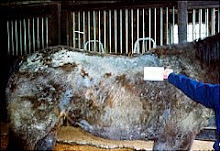


 Posts
Posts


